
Himalayan trail guide · Updated 7 October 2026
Seven winter treks. One route that fits you.
The best winter treks in India range from short forest hikes to demanding frozen-river expeditions. Kedarkantha, Brahmatal, Dayara Bugyal, Kuari Pass, Nag Tibba, Sandakphu–Phalut and Chadar each offer a different way to experience the Himalayas in the colder months.
Use this guide to compare the time needed, winter difficulty and landscape before choosing your snow trekking holiday. Your fitness, the current trail conditions and a well-paced itinerary matter as much as the destination.
Best winter treks in India: a quick comparison
Start with the amount of time you can spare and the kind of walking you enjoy. The durations below are planning estimates, not a fixed departure programme. Travel days and route variations can change the total.
| Trek | Time to allow | Winter difficulty | Good for |
|---|---|---|---|
| Kedarkantha | About 5–6 days | Moderate in winter | Summit views |
| Brahmatal | About 4–6 days | Moderate in winter | Lakes and ridges |
| Dayara Bugyal | About 4–5 days | Easy to moderate; snow-dependent | Meadow landscapes |
| Kuari Pass | About 5–6 days | Moderate; harder in deep snow | Mountain panoramas |
| Nag Tibba | Usually 2 days from the roadhead | Easy to moderate; steep sections | A short getaway |
| Sandakphu–Phalut | About 6–7 days for a longer circuit | Moderate; long walking days | Kanchenjunga views |
| Chadar Trek | Operator-specific; allow acclimatisation | Challenging and highly conditional | Frozen-river terrain |
When is the best time for winter trekking in India?
For many Uttarakhand routes, December to March is the usual winter planning window. January and February often bring more established winter conditions, while early-season snow and late-season melting vary considerably. Check a recent route report instead of choosing dates from photographs alone.
Sandakphu’s appeal includes clear-weather mountain views, although winter wind and snowfall can disrupt plans. Chadar has a much narrower, conditional window: its usual January–February association does not confirm current access. Verify the season’s permissions and ice conditions before arranging travel.
Choose by experience, not just snow depth
If you are new to trekking, consider Nag Tibba for a shorter introduction or Dayara Bugyal for a longer meadow itinerary. Fit beginners can discuss Kedarkantha or Brahmatal with a guide. Kuari Pass and a full Sandakphu–Phalut route demand stamina across several days; Chadar requires specialist preparation.
1. Kedarkantha: a classic Himalayan winter summit
- Region
- Uttarakhand
- Indicative time
- About 5–6 days
- Winter difficulty
- Moderate in winter
Kedarkantha brings together forest trails, the Juda Ka Talab area and an early start towards a panoramic summit. The route from Sankri is a popular choice for a first Himalayan trekking holiday, provided you arrive fit and allow enough time for the climb.
Winter changes the pace: deep snow can make an otherwise manageable stretch tiring, and the summit day is more demanding than the approach walks. Choose it if you want a mountain-top objective and are comfortable with cold camping. Ask your guide about the current snow line, traction equipment and the turnaround plan.
Planning tip: Do not confuse Kedarkantha with the Kedarnath pilgrimage route; they are different destinations. See our Kedarkantha trek itinerary and confirm current winter departures with the team.
2. Brahmatal: alpine lakes and big mountain views
- Region
- Uttarakhand
- Indicative time
- About 4–6 days
- Winter difficulty
- Moderate in winter

Starting around Lohajung, Brahmatal combines oak and rhododendron woodland with higher viewpoints towards Trishul and Nanda Ghunti. Its lake scenery makes it an appealing alternative to a trek focused mainly on reaching one summit.
In winter, sections of the landscape may be buried in snow and the lakes may freeze. Treat the lake as scenery: do not walk onto frozen water. Fit beginners can consider a guided itinerary, but ridge walks and snow-covered climbs still require stamina and appropriate equipment.
Planning tip: Check whether the proposed itinerary includes Brahmatal Lake, the higher viewpoint, or both; route names alone do not describe the full walking programme.
3. Dayara Bugyal: open meadows for a first snow trek
- Region
- Uttarakhand
- Indicative time
- About 4–5 days
- Winter difficulty
- Easy to moderate; snow-dependent
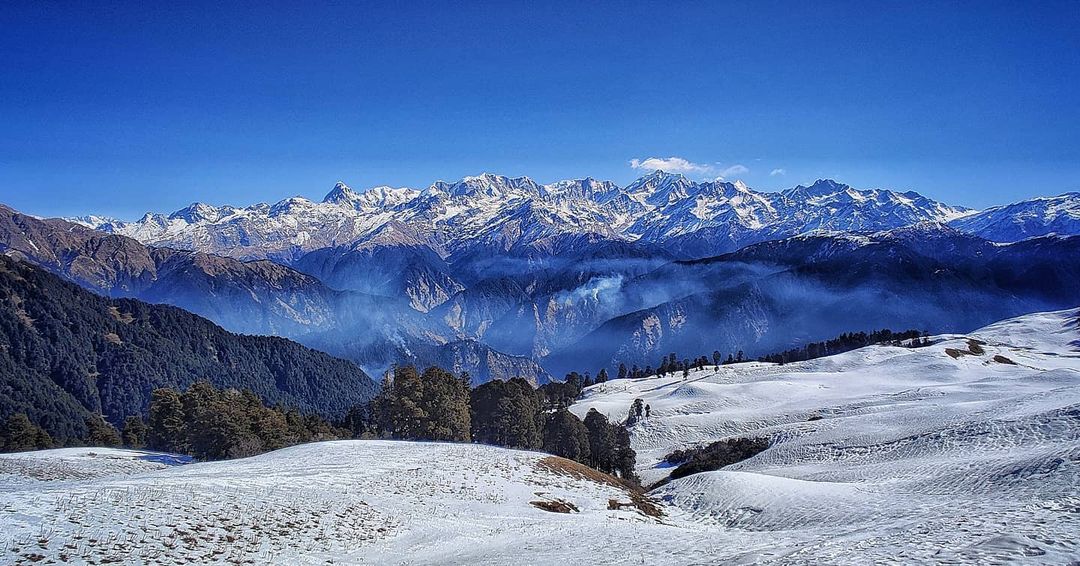
Dayara Bugyal is known for its broad alpine meadows above the villages of the Uttarkashi region. After walking through forest, the landscape opens out into rolling slopes and distant Himalayan peaks. Snow can transform the meadows into one of the most photogenic settings for winter trekking in Uttarakhand.
This is a useful option if you prefer a meadow journey to a steep summit target. An itinerary with measured daily climbs gives new trekkers time to settle into mountain walking. Exposed ground can still be windy, and deep snow may limit how far the group can go.
Planning tip: Confirm the starting village, campsite arrangements and whether travel days are included in the advertised duration.
4. Kuari Pass: forest trails and Garhwal panoramas
- Region
- Uttarakhand
- Indicative time
- About 5–6 days
- Winter difficulty
- Moderate; harder in deep snow
Kuari Pass is a strong choice for walkers who enjoy the changing scenery between forest, meadow and high mountain viewpoints. The Garhwal setting offers memorable views of peaks such as Dronagiri, with the exact panorama depending on your route and the weather.
A winter itinerary needs flexibility. Snow depth, ice and exposure can affect access to the pass, so a responsible guide may stop at a lower viewpoint rather than push towards a fixed target. Choose this trek when you have enough stamina for consecutive walking days and can accept changes to the route.
Planning tip: Ask which sections are planned for your dates and what alternative is used if the higher trail is unsafe.
5. Nag Tibba: a short winter escape from Dehradun
- Region
- Uttarakhand
- Indicative time
- Usually 2 days from the roadhead
- Winter difficulty
- Easy to moderate; steep sections
Nag Tibba, often approached from Pantwari, is one of the more practical choices when you have a weekend rather than a full week. Forest walking and a summit near 3,000 metres give it a mountain feel without the longer commitment of a multi-day Himalayan expedition.
Its shorter itinerary does not guarantee an easy walk: the ascent can be sustained, and snow or ice can slow the descent. It is a reasonable starting point for active beginners who want to try guided winter trekking, but snowfall is less dependable than on some higher routes.
Planning tip: Allow time for the drive from Dehradun and ask for a recent trail report before booking specifically for snow.
6. Sandakphu–Phalut: the eastern Himalayas in winter
- Region
- West Bengal, near the Nepal border
- Indicative time
- About 6–7 days for a longer circuit
- Winter difficulty
- Moderate; long walking days
The Singalila ridge offers a different winter experience from the Garhwal treks. On clear days, the Sandakphu area is celebrated for views towards Kanchenjunga and distant peaks including Everest, Lhotse and Makalu. Village stays and ridge walking can be as much a part of the journey as the mountain panorama.
Choose it for the eastern Himalayan setting and a longer walking holiday, rather than guaranteed deep snow. Wind, poor visibility and snowfall can affect the trail and accommodation arrangements. Extending to Phalut adds distance, so check the daily walking schedule carefully.
Planning tip: Confirm current Singalila access rules, guide requirements, permits and any restrictions relevant to your nationality.
7. Chadar Trek: a specialist frozen-river expedition
- Region
- Ladakh
- Indicative time
- Operator-specific; allow acclimatisation
- Winter difficulty
- Challenging and highly conditional
Chadar follows sections of the frozen Zanskar River when winter conditions and local authorities permit access. Its gorge scenery and ice terrain make it distinctive, but it should be treated as a specialist expedition with substantial cold, altitude and river-ice risks.
It is unsuitable as a casual first snow trek. Safe-looking ice can change, sections may be impassable, and a planned departure can be cancelled. Before making commitments, obtain the current opening status, acclimatisation schedule, required medical checks or permits, equipment list and emergency arrangements from an experienced operator.
Planning tip: Keep bookings flexible. A seasonal listing is not proof that the trek is open or that river conditions will allow your itinerary.
How to prepare for a winter trek
Build fitness before departure
Prepare with regular walking, hill or stair sessions and strength work that matches your ability. Practise walking in your trekking boots and carrying your intended daypack. Tell your guide about your experience and any relevant health concerns before committing to a route.
Pack for cold, wind and changing ground
- Clothing: thermal base layers, fleece, an insulated jacket, a waterproof shell, warm hat and gloves.
- Footwear: suitable trekking boots, spare socks and route-appropriate gaiters or traction equipment as advised by your guide.
- Daily essentials: headtorch, sunglasses, sun protection, water bottle, snacks, personal medication and a compact daypack.
- Camping: confirm the sleeping-bag temperature rating, sleeping mat and tent arrangements before departure.
- Documents: carry identification and check permits, insurance coverage and any route-specific requirements.
Allow time and keep the itinerary flexible
Separate arrival, transfer, walking and acclimatisation days in your plan. Ask about road access, the daily ascent profile, guide experience, communication options and what happens if the route closes. Follow guide instructions around ice and exposed slopes, and never use a fixed summit target as a reason to continue in unsafe conditions.
Pack out your litter, avoid washing in lakes or streams, respect local communities and use designated camps where required. Good winter trekking depends on looking after both the group and the landscape.
What to check in a winter trekking package
Request a written itinerary and an itemised quote. A lower headline price may exclude transport, equipment, permits or the first and last nights of accommodation. Check these details before comparing packages:
- Starting point, transfers, daily walking plan and total trip length.
- Guide support, accommodation, meals and drinking-water arrangements.
- Included equipment, rental charges, permit arrangements and personal gear.
- Cancellation terms, weather alternatives and emergency or evacuation arrangements.
Browse our guided Himalayan treks for current options, or ask for a trek recommendation based on your dates and experience. Availability on the seven routes in this guide must be confirmed individually.
Frequently asked questions about winter treks in India
Which winter treks in India are suitable for beginners?
Nag Tibba and Dayara Bugyal are useful starting points for fit beginners. Kedarkantha and Brahmatal can also suit first-time trekkers with preparation and a guided itinerary. Snow, ice and altitude can make any route harder; choose according to your fitness and the conditions on your dates.
What is the best time for snow trekking in India?
Many Uttarakhand snow treks are planned between December and March, with January and February often offering winter conditions. Snowfall varies each year and is never guaranteed. Sandakphu and Chadar have different seasonal constraints, so check route-specific advice before booking.
How many days should I allow for a winter trek?
Nag Tibba can usually fit into a two-day trek from the roadhead. Most multi-day routes need four to six days or more, plus travel. Chadar needs additional acclimatisation time in Ladakh. Ask for an itinerary that clearly separates trekking, transfers and acclimatisation days.
Is the Chadar Trek open every winter?
No departure should be assumed to operate just because it appears on a calendar. Chadar depends on river-ice conditions, local permissions and the authorities’ decision to allow access. Confirm the current season’s status, operator arrangements and cancellation terms before paying or booking flights.
What should I pack for a winter trek?
Bring suitable trekking boots, thermal layers, fleece, an insulated jacket, a waterproof outer layer, warm gloves, a hat, spare socks, sunglasses, sun protection, a headtorch and a reusable water bottle. Your operator should specify sleeping-bag ratings and whether gaiters or traction equipment are needed or supplied.
How much does a winter trekking package cost?
The cost depends on route, dates, group size, transport, accommodation, guide support, meals, equipment and permits. Request an itemised quote and check exclusions such as flights, personal gear, insurance and emergency evacuation. Compare inclusions rather than choosing only by the headline price.
Can I plan a winter trek with Manu Adventures India?
Contact Manu Adventures India with your dates, group size, experience and preferred route. The team can discuss available guided treks and a suitable itinerary. Confirm route availability, inclusions, equipment, permits and price before treating an enquiry as a booking.
Plan with Manu Adventures India
Tell us what your winter adventure looks like
A weekend in the mountains or a longer Himalayan journey? Share your preferred dates, number of travellers, fitness level and trekking experience. Our team can discuss suitable routes, available arrangements and the next steps.
We are based in Dharamshala. Learn more about Manu Adventures India and our local team, then get in touch for an itinerary and quote. Route availability and price are confirmed after your enquiry.
Prefer a conversation? Call +91 97368 71426 or enquire on WhatsApp.
Route background: Uttarakhand Tourism’s Kedarkantha guide, Brahmatal route overview, Nag Tibba itinerary and West Bengal Tourism’s Sandakphu overview. These references describe the destinations; they do not confirm a departure or current trail access.
