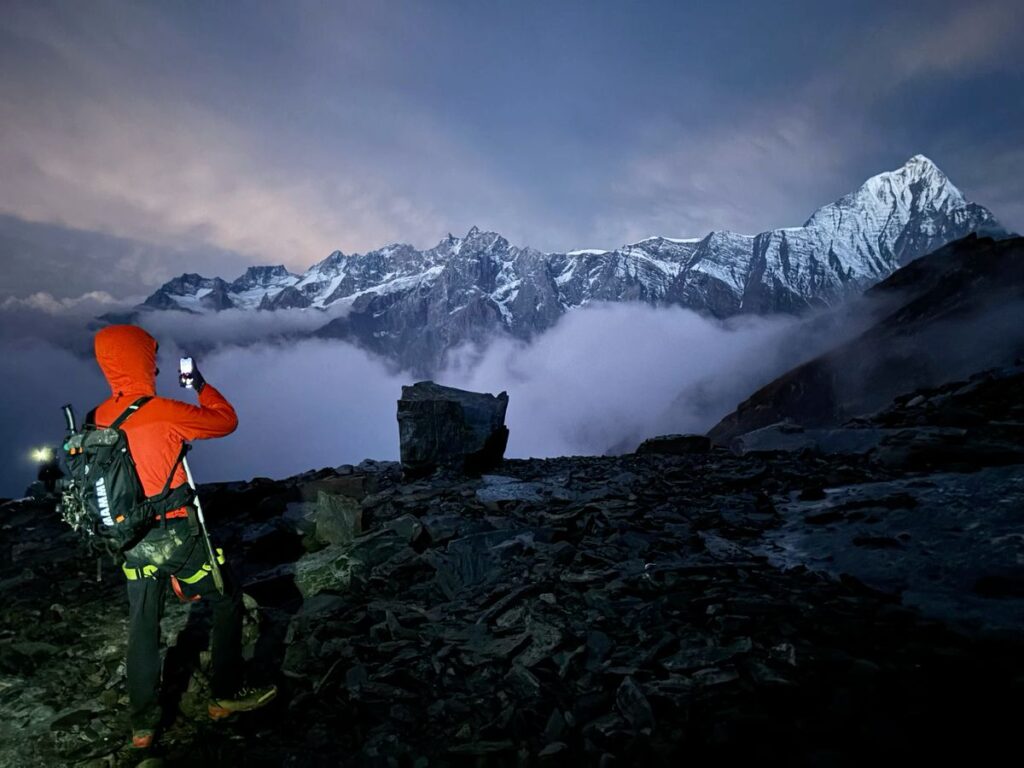
A route with fewer visitors may have less support, more complex access and longer stretches without facilities. Choose it for the experience and your readiness, not simply because it is described as undiscovered. Good preparation matters even more when the walking is remote.
Dhauladhar routes to discuss
Minkiani Pass, the Thamsar region, Jalsu Pass and longer journeys towards Kuarsi offer different terrain and logistics. Lake routes in the Dhauladhar also vary greatly in difficulty. Ask for the exact itinerary and discuss recent mountain experience before selecting a high-pass or remote camping journey.
Work with local knowledge
Use guides who can explain grazing areas, village customs, campsite permissions and seasonal access. A line on a map may cross working landscapes or sensitive ground. Respect residents’ preferences and avoid publishing precise locations of vulnerable camps or water sources merely to promote an offbeat label.
Keep the impact manageable
Choose a sensible group size, carry waste back and avoid creating new fire pits or shortcuts. Confirm how supplies, staff and camp sanitation are arranged. Keep flexibility for route changes and let current conditions guide the final decision.
Frequently asked questions
Are less-visited trails better for beginners?
Not necessarily. Remote access, uncertain surfaces and limited support can make a quieter route more demanding than a popular one.
Share your dates, group size and interests with our Dharamshala-based team. We can help you shape a guided trek or private India itinerary around your pace.