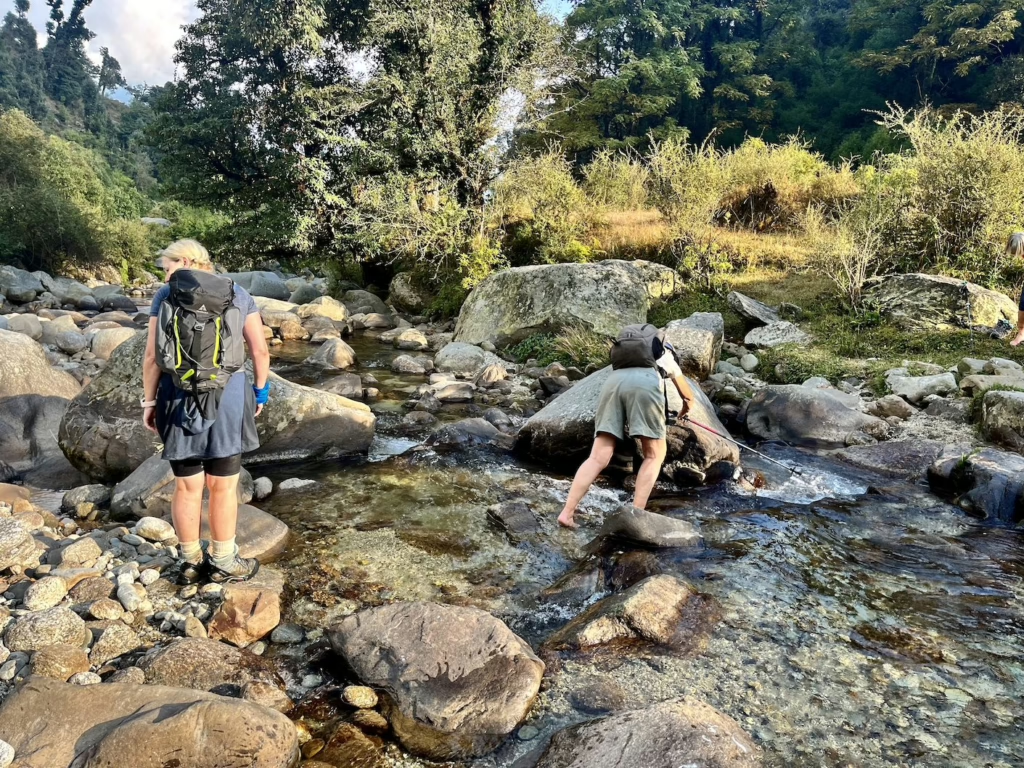
Use established paths and designated camps where required. Shortcuts damage slopes and can create unsafe tracks for others. Carry wrappers and personal waste back to an appropriate disposal point, and ask the organiser how camp waste is managed. A clean campsite includes what is not immediately visible.
Protect water and keep camps quiet
Avoid washing or leaving food waste in streams and lakes. Follow the campsite’s arrangements for sanitation and water collection. Keep music low or use headphones, and do not assume a bonfire is permitted. Local fire restrictions and habitat protection take priority over the atmosphere of a camp evening.
Support local work fairly
Choose guides and suppliers who know the region, explain their arrangements and treat staff responsibly. Respect homes, grazing areas and religious places. Ask before taking photographs or entering a building, and buy local products without turning people’s daily lives into an attraction.
Choose a realistic trip
Crowding, seasonal access and difficult conditions all affect a route’s impact. Be willing to change plans when the trail or community needs space. Responsible trekking includes sensible pacing and guide-led decisions, not only choosing reusable equipment.
Frequently asked questions
Is biodegradable litter safe to leave on a trail?
Carry food waste back too. It can attract animals, alter feeding behaviour and leave a mess for residents and other walkers.
Share your dates, group size and interests with our Dharamshala-based team. We can help you shape a guided trek or private India itinerary around your pace.