
An 8-day journey from Delhi to Rishikesh, with three nights in Ghangaria, a guided national park visit and a planned Hemkund Sahib excursion.
Walk through forest approaches and changing alpine landscapes with clear advice on fitness, monsoon travel and seasonal access. Come for the flowers, but leave room for the mountains to set the pace.
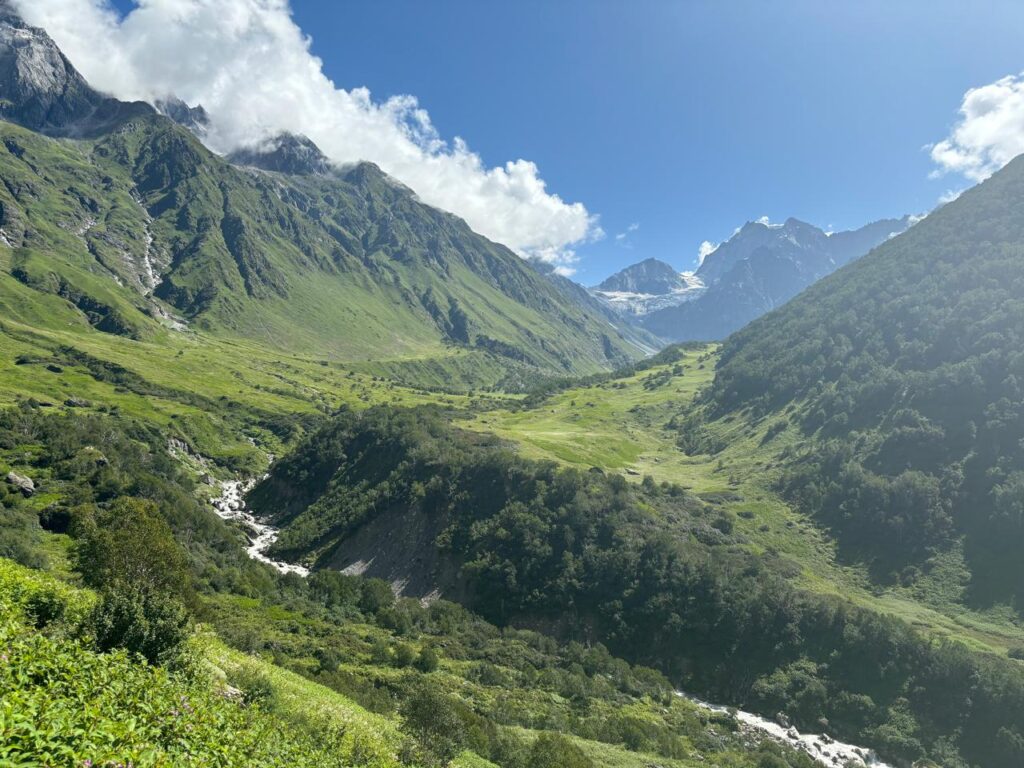
The Valley of Flowers Trek connects a well-used mountain approach with a protected landscape of meadows, streams and steep Himalayan slopes. Ghangaria is the overnight base for both the valley visit and the separate climb towards Hemkund Sahib.
The national park forms part of the UNESCO-listed Nanda Devi and Valley of Flowers National Parks. Its appeal changes through the season: different plants flower at different times, clouds can transform the view, and the trail needs care after rain. Wildlife sightings and a particular floral display cannot be promised.
This package gives you one full valley exploration day and a scheduled Hemkund excursion, with road travel before and after. It is a guesthouse-based journey, not a camping expedition inside the park. Distances are approximate and depend on current trail access and the group’s turnaround point.
Compare our Himalayan treks, read our Himalayan trek planning guide, or meet Manu Adventures India.
Price on request. Request a written quotation covering dates, vehicle arrangements, rooms, meals and applicable permit fees.
This route starts in Delhi and ends in Rishikesh. Walking stages are based around Ghangaria, with same-day returns from the national park and Hemkund Sahib. Travel and walking times below are planning estimates.
Meet at the agreed Delhi pickup point and drive to Haridwar. Check in and rest after the journey. If traffic and arrival time allow, visit Har Ki Pauri for the evening Ganga Aarti. Exact pickup details and sightseeing arrangements are confirmed before travel.
Overnight: Haridwar.
Travel along the mountain-road corridor through the Alaknanda valley towards Joshimath. This is a long driving day; allow roughly 9–11 hours, with timing dependent on road conditions and stops. Rest at the hotel or homestay and review the walking stages with your guide.
Overnight: Joshimath.
Continue via Govindghat to the accessible Pulna roadhead. Walk towards Ghangaria through the forest and riverside approach. The listed stage is approximately 10 km and commonly takes 5–7 hours. Set a steady pace, particularly on the steeper stretches, and settle into the guesthouse.
Overnight: Ghangaria.
Walk from Ghangaria to the park checkpoint and complete the entry formalities. Follow the permitted trail into the valley, with time for the changing meadow scenery and seasonal flowers. The planned return walk is approximately 7–10 km, depending on how far the group explores. Return to Ghangaria before the required exit time; no overnight stay is planned inside the park.
Overnight: Ghangaria.
The scheduled excursion climbs steeply from Ghangaria towards Hemkund Sahib, approximately 4,329 m. Allow around 12 km return and 7–9 hours as a planning estimate. This is substantially harder than the valley visit. Weather, seasonal access and individual readiness determine whether to attempt it. Discuss a rest-day alternative with the team if this climb is unsuitable.
Overnight: Ghangaria.
Check out and retrace the approach towards Pulna, approximately 10 km downhill. Allow roughly 4–6 hours for walking, with care on wet paving and uneven sections. Meet the vehicle and return through Govindghat towards Joshimath for the night.
Overnight: Joshimath.
Begin the long drive back through the river valleys to Rishikesh. Allow approximately 9–11 hours depending on traffic, road conditions and stops. Check in on arrival. A riverside stroll or market visit may be possible if time and energy permit.
Overnight: Rishikesh.
After breakfast, check out and transfer to the agreed Rishikesh railway or bus departure point. A transfer to Haridwar, Dehradun Airport or Delhi can be quoted separately. The standard journey finishes in Rishikesh; it is not a Delhi-to-Delhi package.
Overnight: Departure.
Confirm the Delhi pickup, mountain transfers, Rishikesh drop-off, vehicle type and meal schedule in writing. The listed driver costs should not be read as a promise of unlisted transport tickets or extra airport transfers.
July to September is the usual flowering-season window to discuss. The display changes through the season, and a single “best week” cannot guarantee every flower or clear views. Travel outside this window depends on the official opening period and conditions.
Rain can affect roads, visibility and footing. Leave spare time before onward trains or flights, use waterproof protection and follow local closure advice. A guide may shorten a valley visit or postpone a walking stage.
Uttarakhand Tourism’s Valley of Flowers guide confirms that camping and overnight stays inside the park are not allowed. Follow current entry and exit instructions rather than assuming unlimited visiting hours.
Moderate does not mean effortless. The approach to Ghangaria includes sustained climbing, and the return is a long descent. The valley day adds further walking at altitude, often on damp or uneven ground.
Hemkund Sahib is the harder objective: the route climbs steeply to approximately 4,329 m before returning the same day. It is scheduled in the itinerary, but access and your readiness must be assessed. Guests who prefer to rest in Ghangaria should agree the alternative and any support needs beforehand.
Build endurance through regular walks, hills and stairs. Share your experience and any concerns with the team, and seek appropriate professional advice for personal health questions before travelling.
Stay on permitted trails, leave flowers and plants undisturbed, and carry all litter back. Keep washing away from streams and respect local homes and religious sites. At Hemkund Sahib, follow the gurudwara’s guidance on clothing, conduct and access.
Ask about baggage storage and carrying arrangements; do not assume porter services are included. You can also browse India tour packages if you want to combine this trek with a longer journey.
The advertised programme is 8 days / 7 nights: Delhi to Haridwar, Joshimath, Ghangaria and back via Joshimath to Rishikesh. Three nights are spent in Ghangaria. It includes a Valley of Flowers visit and a scheduled Hemkund Sahib excursion, subject to conditions and readiness.
It starts at an agreed pickup point in Delhi and ends in Rishikesh on Day 8. Confirm the exact meeting and drop-off details in your quotation. Transfers to Delhi, Haridwar or Dehradun Airport at the end are additional arrangements.
July to September is the usual flowering-season planning window, with displays changing through the monsoon. Flower species, colour and abundance vary with the date and weather. Ask for current park access and route conditions; no booking guarantees peak bloom.
No. Access is seasonal and depends on the official opening period and local conditions. Check the current park notification before confirming travel dates. Do not treat a general season description as a live opening announcement.
The Valley of Flowers programme is moderate for fit walkers but includes long uphill and downhill days, altitude and wet or uneven surfaces. Hemkund Sahib is a steeper and more demanding excursion. Regular hill walking and preparation are valuable, even for a first guided trek.
A Hemkund Sahib excursion is scheduled on Day 5 with guide support, subject to seasonal access, weather and the group’s readiness. It reaches approximately 4,329 m and is harder than the valley day. Discuss your fitness and a rest-day alternative before booking.
No. Camping and overnight stays are not permitted inside the national park. The plan uses hotels or guesthouses in Ghangaria and returns there after the daytime park visit. Follow the guide’s turnaround time and park instructions.
Seven nights are planned in sharing accommodation: one in Haridwar, two in Joshimath, three in Ghangaria and one in Rishikesh. Hotels, guesthouses or homestays are selected for the final package. Confirm room sharing, facilities and meal plans before payment.
The listed inclusion covers the Valley of Flowers National Park entry permit for Indian nationals. Overseas visitors should confirm the applicable permit charge and documents separately in their quotation. Do not assume that all nationality-based fees are identical.
Unlisted transport tickets, unspecified meals and drinks, personal purchases, porter or pony charges, helicopter services, insurance, evacuation expenses, tips and extra costs arising from disruptions are excluded unless expressly agreed. Confirm the complete transport and meal list in writing.
Bring trekking shoes with good grip, rain protection, warm layers, spare socks, a reusable water bottle, sun protection, a headlamp, personal medicines and identification. Protect electronics and spare clothing from rain. Ask about luggage arrangements before bringing a large bag.
Send your dates, group size and walking experience through the form. The listed minimum group size is four. Our team will discuss availability, park access, the Hemkund option, transport, accommodation and the final price before confirming a booking.
Kedarkantha Trek — a summit-focused forest and camping journey in Uttarakhand.
Hampta Pass Trek — changing valley scenery and a high-pass crossing.
Kashmir Great Lakes Trek — an extended alpine-lake walking route.
Send your dates, group size and previous walking experience. Let us know whether you would like to attempt Hemkund Sahib and where you need to travel after Rishikesh. We will confirm the current arrangements and a detailed quotation.
Manu Adventures India
Guided treks and tours since 2005
+91 97368 71426
manuadventures@gmail.com
We use your details to respond to this enquiry. Read our privacy policy. Availability and price must be agreed before a booking is confirmed.