
RESPONSIBLE TRAVEL
A dog may accompany walkers for many reasons. Enjoy the encounter from a respectful distance without assuming that the animal is a guide or guardian.
By Manu Adventures India · Updated 6 November 2026
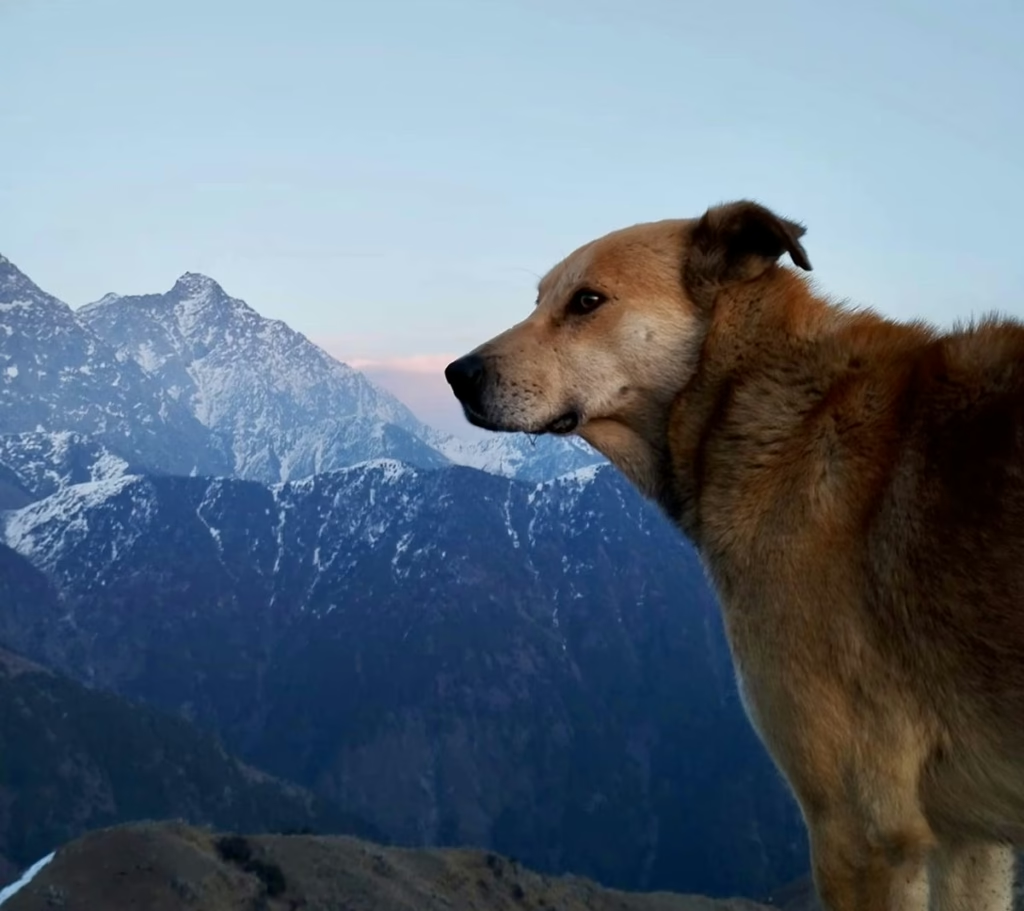
Curiosity, familiarity with people, food expectations and ordinary roaming can all play a part. We cannot know an individual dog’s motivation simply because it follows a trail. Mountain stories can be charming, but describing every encounter as loyalty or protection creates expectations the animal cannot fulfil.
Give unfamiliar dogs space and avoid crowding, touching or startling them. Ask your local guide how to respond, especially around settlements, livestock or working animals. Children should stay close to their group rather than approach a dog for a photograph.
Do not deliberately lure a dog away from its home area or encourage it to continue into difficult mountain terrain. Feeding along the route can create expectations and draw animals towards camps or wildlife. Follow local guidance on waste and food storage.
An animal’s direction does not establish the correct route or suitable trail conditions. Stay with your guide, use the agreed path and make decisions around the group’s safety. Respectful encounters leave the animal free to return to its own surroundings.
Tell your guide that an animal is following rather than trying to manage it independently. The guide may recognise local circumstances around a settlement or campsite. Keep the group calm and avoid surrounding the dog for pictures. Let it have space to stop or move away without being called back by different people.
Keep snacks and food waste packed away. Do not use food to make the dog pose, stay beside you or continue uphill. A friendly encounter near a village does not mean the animal can cope with a remote route or a long return. Resist giving the encounter a human story that encourages you to take responsibility for leading it farther from familiar surroundings.
Before the walk, explain to children that unfamiliar animals should be watched from a distance. Keep them close when passing dogs, livestock or grazing areas. Ask the local guide how to proceed around working animals, and do not approach a flock or herd simply because the scene looks photogenic.
A dog resting beside a house or shop may have an owner nearby even if no collar is visible. Do not assume it is abandoned or needs to be taken somewhere. If you are concerned about an animal’s condition, tell the guide or a responsible local contact. A considered local response is more useful than an impulsive attempt to carry or relocate it.
Follow the group’s food storage and rubbish arrangements at tea stops and overnight camps. Scraps left behind can encourage repeated visits and create conflict with residents or wildlife. Keep tent entrances and cooking areas managed according to the team’s instructions, and do not invite an unfamiliar dog inside shared accommodation.
If the dog leaves the path, disappears into vegetation or heads towards another ridge, remain on the agreed route with your guide. Its behaviour tells you nothing reliable about crossings, weather or access. Read our responsible trekking guide for wider trail conduct and the trek preparation guide for decisions that should remain with the walking team.
No. Stay with your guide and planned route. A dog’s movements are not a reliable source of navigation or information about conditions.
Share your dates, group size and interests with our Dharamshala-based team. We can help you shape a guided trek or private India itinerary around your pace.