
YOUR FIRST HIMALAYAN TREK · ROUTES & PREPARATION
Himalayan Treks in India for Beginners
Start with a route that suits your walking fitness, available time and the season. A rewarding first Himalayan journey can be a shorter ridge walk or a carefully planned multi-day trek.
This guide compares five options to discuss, explains what preparation matters and identifies more demanding journeys to consider later.
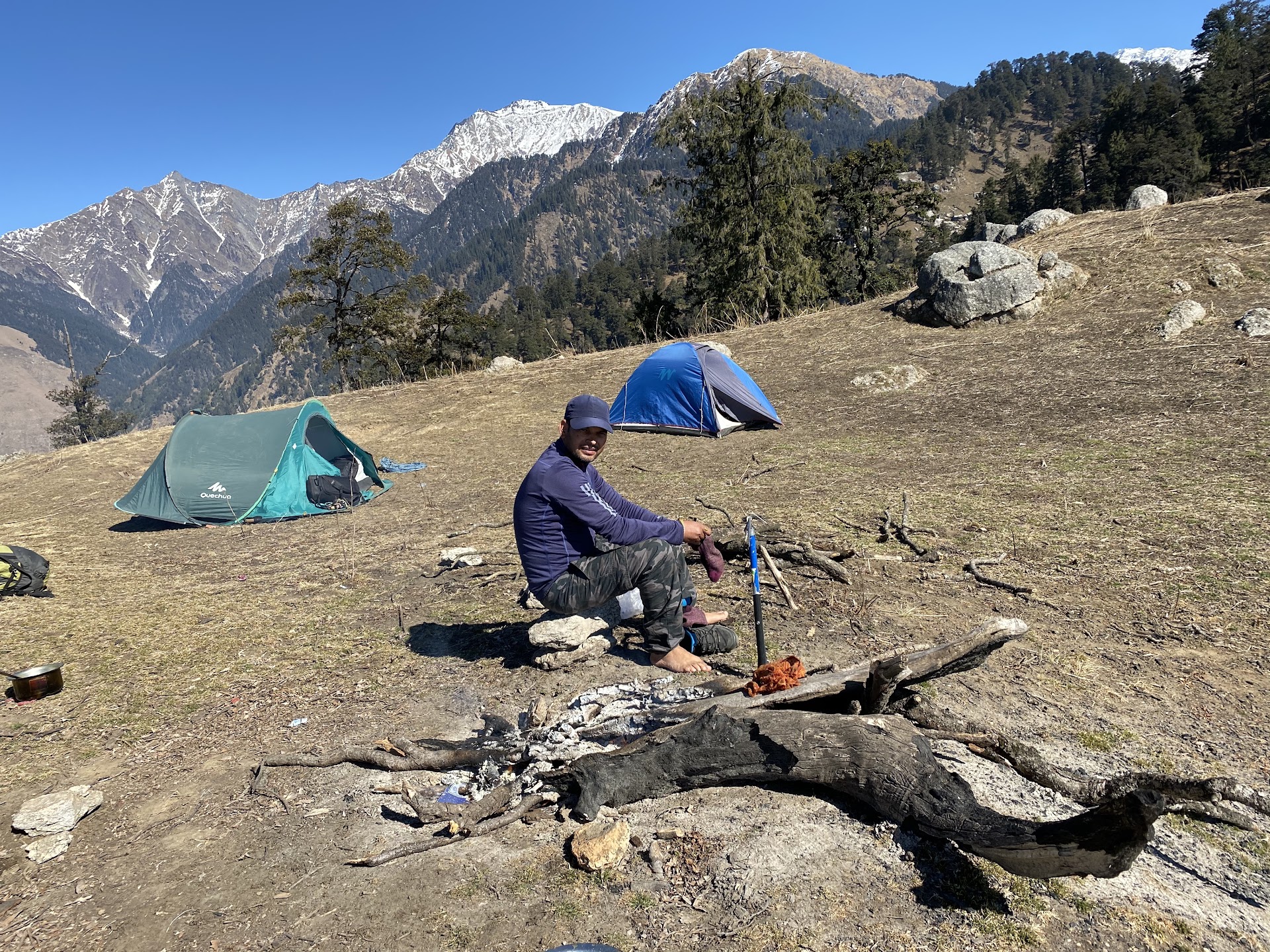
Choose the experience and level of support that match your first mountain journey.
Choose the right kind of first trek
New to trekking
Begin with a manageable route and realistic walking stages. Think about uphill effort, the descent, uneven ground and how you feel carrying a daypack. A short guided walk can be more useful than committing straight to a remote high pass.
Experienced walker, first time in India
Your hiking background may open more options, but local terrain, altitude, weather and logistics still need assessment. Share the longest recent hikes you have completed and any previous experience sleeping at altitude.
Choose by the whole itinerary
Compare daily walking hours, ascent, sleeping locations, transfers and support. A difficulty label or summit photograph cannot explain all of those details. Ask questions before confirming a route.
Five routes to discuss for a first Himalayan trek
These options have different demands. Suitability depends on fitness, season, the exact itinerary and current conditions; they are not interchangeable “easy” treks.
Triund · A shorter introduction
Base: Dharamshala / McLeod Ganj · Format: guided day walk or overnight programme.
Forest paths lead to an open ridge with views of the Dhauladhar and Kangra Valley. Triund is a useful first option for active beginners who want a shorter commitment.
Check first: the climb is sustained and the descent is uneven. Confirm the starting point, walking time and current trail conditions. Overnight arrangements must follow the booked programme and local permissions.
Kareri Lake · A longer mountain walk
Region: Himachal Pradesh · Format: multi-day itinerary, depending on the approach and village stays.
Village surroundings, forest and stream-side trails lead towards a mountain lake. Consider it if you have regular walking fitness and want more time on the trail than a short ridge hike.
Check first: expect a steeper, rockier upper section. Weather and stream levels can affect footing and pace. Read the complete programme to separate walking days from transfers and hotel nights.
Laka Got · Build on the Triund route
Base: McLeod Ganj / Bhagsunag · Format: a longer route through Triund and the Snowline area.
Laka offers a step up for fit first-time trekkers comfortable with consecutive walking days and mountain camping. It is better considered after discussing your walking experience and available time.
Check first: the commonly used name “Laka Glacier Trek” does not guarantee snow or a glacier experience. Confirm current conditions, camp locations and the return route before booking.
Kedarkantha · A prepared multi-day choice
Region: Uttarakhand · Format: a guided camping itinerary with a summit objective.
Forest trails and mountain camps make Kedarkantha a route to discuss for fit beginners ready for several walking days. A first-time trekker still needs preparation and an itinerary suited to the season.
Check first: snow, ice, cold and the summit-day effort can make winter conditions demanding. Ask about sleeping altitudes, equipment, daily stages and a turnaround plan. A summit is never guaranteed.
Valley of Flowers · Seasonal walking in Uttarakhand
The Valley of Flowers is known for alpine plant life and mountain scenery. Its approach and repeated walking days make it a choice for visitors with sufficient fitness and a well-planned schedule, rather than a casual garden stroll.
Check first: confirm the park’s current visiting season, approach, accommodation and daily walking stages. Flower displays vary with conditions. Rain, slippery trails and road disruption require a flexible plan. If Hemkund Sahib is offered as an addition, assess it separately because it changes the altitude and effort.
Read Uttarakhand Tourism’s Valley of Flowers information for destination context, then confirm the actual programme before booking.
Two journeys to assess more carefully
Hampta Pass · A high-pass crossover
Hampta is a more demanding multi-day objective, with high-pass terrain and a route that can be affected by snow and stream conditions. It should be assessed against actual mountain experience and fitness, rather than automatically grouped with a short first trek.
Ask about the precise stages, sleeping locations, river crossings, equipment, support and turnaround options before considering it.
Nag Dal & remote Dhauladhar lakes
Remote lake journeys involve a longer commitment, rough terrain and more complex camping and support logistics. They are better discussed after building experience on shorter mountain routes.
Request the exact approach, daily camps, route grade and contingency plan. A quieter trail does not necessarily make it an easier one.
Choose the season for the route
Spring & early summer
Lower trails may be workable while higher ground retains snow. Confirm the specific route rather than assuming all Himalayan treks open together. Warm daytime weather at the base does not describe conditions at camp.
Autumn after the monsoon
Often considered for mountain views and walking, with colder nights and shorter days as the season advances. High routes can be affected by fresh snowfall. Keep a weather alternative in the plan.
Winter trekking
A snow-covered route needs a different assessment from the same trail in warmer conditions. Confirm suitable equipment, guide experience, local permissions and the group’s preparedness.
Monsoon & seasonal park visits
The Valley of Flowers is associated with a seasonal flowering period, while many other routes can be disrupted by heavy rain. A flower-viewing season does not remove road, weather and trail considerations.
Prepare your fitness & equipment
Build walking endurance
Practise regular walking and progressively longer uphill and downhill outings before your trip. Test your footwear and daypack on uneven terrain. Judge a route by the walking you can sustain comfortably over successive days.
Tell the team about recent hiking experience and walking limitations. Your guide can advise on route suitability; personal medical concerns need qualified health advice.
Pack for changing conditions
- Broken-in walking shoes with reliable grip.
- Warm layers and weather-appropriate waterproof protection.
- A comfortable daypack, water bottle and headlamp.
- Sun protection and essential personal items.
- The route-specific equipment list supplied before departure.
- Any personal medication and documents you need, kept accessible.
Confirm which camping items are provided and which need to be brought or rented.
Allow time to adjust to altitude
Plan a gradual ascent, including appropriate sleeping-altitude stages; arriving in a mountain town for one night is not a universal acclimatisation plan. Seek travel-health advice for higher routes and personal medical concerns.
Learn the signs of altitude illness and tell your guide promptly if you feel unwell. Do not continue to a higher altitude with symptoms. Worsening symptoms require descent and appropriate medical help. Read the CDC’s high-altitude travel guidance before finalising a high-altitude itinerary.
A simple first-trek trip structure
Arrival day: reach your base, rest after travel, meet the team and review equipment and the route.
Trekking stage: follow the chosen day-walk or multi-day itinerary, with realistic walking and rest periods.
Return and buffer: allow time to descend, return to the roadhead and adjust the plan if weather or pace changes.
This is a planning structure, not a substitute for a route-specific itinerary or altitude assessment. Avoid a tight international-flight connection immediately after a mountain trek.
Know what your trek booking includes
Prices depend on route, travel dates, group size, support and comfort level. Ask for an itemised quote for your actual programme.
Guide, equipment & meals
- Guide and support staff arrangements.
- Exact trek stages and approved overnight locations.
- Tents, sleeping bags, mattresses and cooking equipment where included.
- Meals, drinking-water arrangements and dietary requests.
- Permits, entry or camping charges listed as included.
- Porter support and the personal-bag allowance, if booked.
Transfers, personal costs & flexibility
- Pickup, drop-off and trailhead transfers.
- Hotel nights before or after the trek.
- Personal clothing, equipment rental and meals outside the trek.
- Extra-night or changed-route costs.
- Support and emergency arrangements for the route.
- Travel insurance suited to the activities and altitude limits.
Review your written itinerary, payment terms and refund policy before confirming. Our travel and trekking services page explains the kinds of arrangements you can request.
Planning your first visit to India
Choose a realistic arrival city and allow for the journey to the trekking base. Dharamshala and McLeod Ganj are bases for Triund and Laka; Uttarakhand routes have different approaches and transfer arrangements. Do not treat nearby-looking destinations on a national map as short transfers.
Check entry requirements through the official India visa portal and confirm your actual arrival details before arranging pickup. Keep booking contacts and essential documents available offline.
Combine your trek with a few gentler sightseeing days if time allows. Read our India travel guide and Dharamshala planning guide for ideas. Respect local communities, follow campsite rules and carry litter out of the mountains.
Beginner Himalayan trekking FAQs
Which Himalayan trek should I choose for my first trek?
Triund is a useful starting point for active beginners wanting a shorter guided walk. Kareri, Laka, Kedarkantha and Valley of Flowers need different levels of time, fitness and preparation. Share your recent walking experience before choosing a route.
Does beginner-friendly mean easy?
No. It usually means the route can be considered without a long trekking history, under suitable conditions and with appropriate preparation. Sustained climbs, uneven descents, altitude, cold and consecutive walking days can still make it demanding.
How many days should I allow?
A shorter Triund programme can fit a day or overnight outing. Multi-day treks need time for the approach, actual walking stages, any adjustment days and the return journey. Check whether the advertised duration includes hotel nights and transfers.
Can I see snow on a beginner trek?
Possibly, depending on route and recent weather, but snow is not guaranteed. Snow and ice also change the equipment and skills needed. Do not choose a route solely because an old photograph shows snow.
Is one day in the mountains enough to acclimatise?
There is no universal one-day rule. Your ascent and sleeping-altitude profile matter. Discuss the itinerary with a qualified guide and seek travel-health advice for higher routes or personal medical concerns.
Can I trek alone or join a group?
Ask about available group departures and private guiding for your dates. Do not assume a group is operating or that solo trail access is permitted. Confirm guide support, route arrangements and the current local requirements.
Is a remote lake or high pass suitable for a first trek?
A first visit to India does not mean a first-ever trek. Experienced hikers visiting India may consider more demanding routes after assessment; someone new to sustained mountain walking should usually begin with a shorter, less remote objective.
What should I send when requesting a quote?
Send travel dates, group size, available days, arrival point, recent walking experience and preferred comfort level. Mention dietary needs, walking limitations and whether you want transfers, camping equipment, meals or porter support included.
Plan a first trek that fits you
Manu Adventures India is based in Bhagsunag near McLeod Ganj. Tell us your dates, available days, group size, walking experience and preferred comfort level. We will help shortlist a suitable route and explain its current arrangements.
Meet our local team, read traveller reviews and compare the complete guided trek itineraries before deciding.