
YOUR FIRST INDIA JOURNEY
Practical advice from our Dharamshala team · Updated 21 October 2026
Arrive prepared.
Explore with confidence.
These India travel tips for first-time visitors cover the decisions that matter: entry documents, where to go, how to travel, money, food, local customs and what to pack. Plan a manageable route, arrange your arrival and leave room to enjoy the places you visit.
From the Golden Triangle to Tibetan culture in McLeod Ganj and guided Himalayan walks, our Dharamshala team can help you build a trip around your interests and pace.
JUMP TO YOUR NEXT DECISION
Your first-trip essentials
- Before booking: check entry eligibility, passport requirements and the best season for your route.
- Before flying: confirm your first hotel, airport pickup, insurance and a working way to get online.
- On arrival: use an authorised transfer, keep some rupees and take your first day slowly.
- While travelling: allow time for traffic, use safe drinking water and confirm prices and inclusions.
- In the mountains: check local conditions and build in a weather buffer.
1. Check your visa and arrival documents
Entry requirements depend on your nationality, passport and travel purpose. Check the official Indian Visa portal or your Indian mission before making non-refundable bookings. If eligible for an e-Visa, confirm your category, passport validity, blank-page requirements, permitted entry point, stay limit and approval documents.
Keep your approval, onward travel information and first hotel address accessible offline. Use the government portal directly when applying; check its current fee and processing instructions.
The official portal provides an e-Arrival card within 72 hours before arrival. This records arrival information and is not a visa. Check the latest instructions for your travel status before departure.
2. Choose a route you can enjoy
For a first visit, we suggest starting with two or three main destinations. A long list of cities can turn a holiday into a sequence of transfers. Count travel days separately and leave a lighter day after your international flight.
- About one week: focus on Delhi, Agra and Jaipur, or choose a single region for a slower visit.
- 10–14 days: consider a cultural route with a Dharamshala extension, allowing for the journeys between regions.
- Two weeks or longer: combine selected cities, countryside and a suitable guided trek, with recovery and weather days.
These are planning suggestions rather than fixed packages. Explore our India tours and travel destinations to find a route that fits your dates.
Three ways to shape your first India trip
Choose the experience you most want, then allow enough time to enjoy it. These are starting ideas for a private itinerary, with dates and inclusions confirmed in your quote.
01 · CULTURE
Delhi, Agra & Jaipur
A focused introduction to Mughal architecture, old-city walks and Rajasthan’s heritage. Plan a lighter arrival day, agree guide arrangements and leave time between cities.
02 · SLOWER TRAVEL
Dharamshala & McLeod Ganj
Build a stay around Tibetan culture, local food and village walks. Choose a hotel location carefully and separate sightseeing days from longer hikes.
03 · MOUNTAIN DAYS
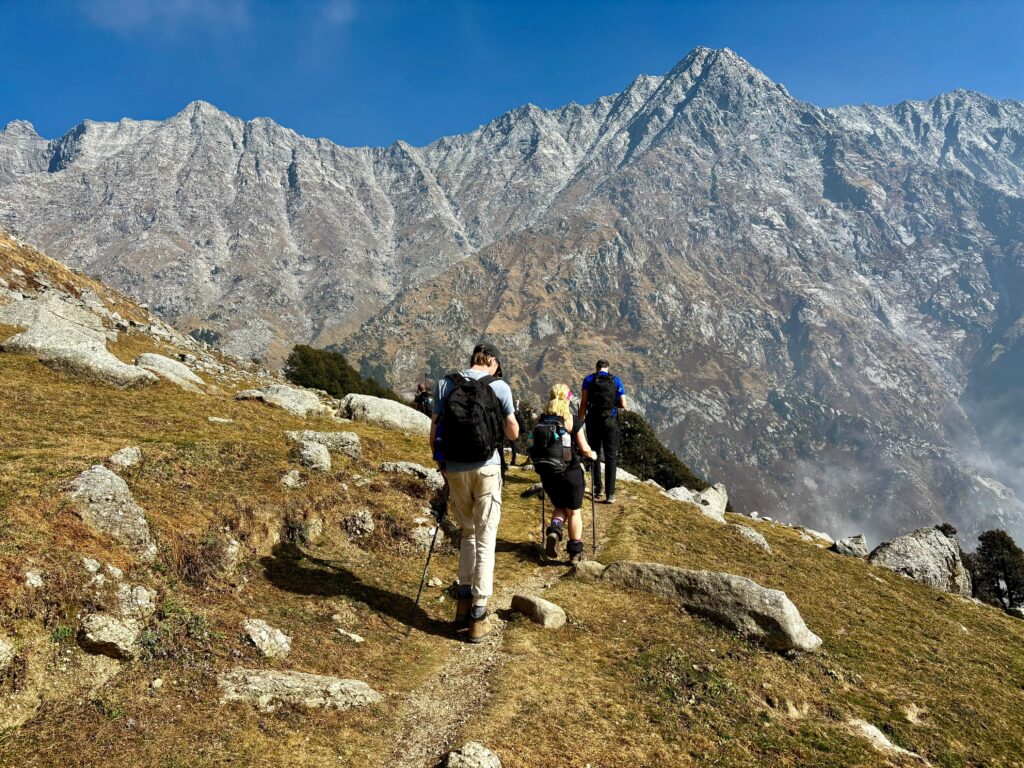
Add a guided Himalayan walk
Match the route to your walking experience and the conditions. Confirm the start point, equipment, weather alternatives and insurance before booking.
3. Match your trip to the season
India has many climates. A good month for Rajasthan may be unsuitable for a high Himalayan pass. Check the actual destinations and elevations on your itinerary.
- Delhi, Agra and Rajasthan: October to March is generally more comfortable for sightseeing; winter mornings can be cold or foggy, while late spring and summer can be very hot.
- Dharamshala and the lower Dhauladhar trails: spring and autumn are common choices. Rain, snow and local closures can affect access.
- Higher Himalayan treks: opening dates depend on snow, permits and local restrictions. A lower trail being open does not mean a high pass is safe.
- Monsoon travel: expect regional differences and possible road disruption. Mountain itineraries need particular flexibility.
Check the India Meteorological Department forecast and warnings near departure, alongside local advice. Keep a buffer before onward flights after a mountain journey.
4. Arrange a calm first arrival
Book your first night before flying and share your flight number with the hotel or transfer provider. Ask where your driver will wait, how to identify them, and what happens if your flight is delayed.
- Keep the hotel name, address and contact number offline.
- Use an authorised airport taxi counter, your confirmed pickup or a verified app booking.
- Confirm the vehicle, total fare, tolls and parking arrangements.
- Contact your hotel directly if someone claims it is closed or your reservation has been cancelled.
- Leave time for immigration, baggage collection, traffic and rest.
5. Plan transport with realistic buffers
Compare the whole journey, including airport transfers and road connections. A short flight can still require much of a day; a short distance on a mountain road may take several hours.
Book trains through IRCTC or a trusted agent and check the ticket status, station name and boarding details. A waitlisted reservation should not be treated as a confirmed seat. For flights, check baggage allowances and the exact airport and terminal.
For Dharamshala, compare a flight to Kangra/Gaggal Airport with a train to Pathankot or Una followed by a road transfer. Verify current schedules before booking. Our travel services team can help plan airport pickups, road transfers and guided sightseeing.
6. Carry payment options and agree costs
Carry a mix of cash in Indian rupees and usable bank cards. Larger hotels may take cards, while small shops, cafés and remote stops may need cash. Ask your bank about overseas use and withdrawal fees.
UPI is widely used locally, but visitors should check their eligibility and setup options before relying on it. Keep a backup payment method and small notes for everyday purchases.
- Ask whether a quote includes taxes, transport, meals, tickets, guide fees and accommodation.
- Confirm cancellation terms and get a receipt for deposits.
- Bargain politely where prices are negotiable; fixed-price shops and official ticket counters are different.
- Ask whether a service charge is already included before leaving an optional tip.
Budget by category: accommodation, intercity journeys, local transport, food, sightseeing, guides, insurance and contingency. Your route, season and comfort level matter more than a single daily figure.
7. Eat thoughtfully and prepare for your health needs
Choose freshly cooked food served hot, wash your hands and use sealed bottled water or water you know has been safely treated. Use the same care with ice, raw produce and drinking water on treks. A busy food stall alone does not guarantee food safety.
Explain allergies clearly and carry a written note if needed. Ask about ingredients and cross-contact rather than assuming a dish is suitable. Discuss your itinerary, vaccinations and medicines with a travel health professional before departure; see the CDC India travel health guidance.
Keep prescription medicines in their original packaging with supporting documents. Use sun and insect protection appropriate to your route. Avoid touching unfamiliar animals and seek prompt medical care after an animal bite or scratch.
8. Stay connected and keep useful contacts
Compare roaming, a travel eSIM and an Indian SIM from an authorised provider. Check that your phone supports the option you choose. Local connections may require passport and visa checks, and activation can take time.
- Download maps, tickets, hotel details and your itinerary for offline use.
- Save your driver, hotel, guide, insurer and embassy contacts.
- Keep a charged power bank and share your route with someone you trust.
- Expect weak or absent mobile coverage on remote trails.
India’s national emergency response number is 112. Save it before travelling and consult the official Emergency Response Support System for information. A hotel or guide can help explain your location, but contact emergency services directly when urgent help is needed.
9. Respect local customs and travel confidently
Carry light, comfortable clothing and a scarf or cover-up for religious visits. Follow each site’s rules on shoes, head coverings, photography and entry. Ask before photographing people, ceremonies or private spaces.
Solo visitors can make travel easier by choosing well-reviewed accommodation, arranging late arrivals in advance and sharing transfer details. Confirm the driver and vehicle before getting in. Decline unwanted approaches firmly and move to a staffed public place if uncomfortable.
Keep valuables secure in crowded areas. Verify claims about closed attractions or changed bookings directly with the provider. Check your own government’s travel advice for the specific regions on your route.
10. Pack for your route, including mountain days
- Passport, visa or relevant entry documents, insurance and secure copies.
- Comfortable walking shoes, breathable layers, sun protection and a rain jacket.
- Personal medicines, toiletries, hand sanitiser and a small day bag.
- Phone charger, suitable plug adapter, power bank and offline contacts.
- For treks: suitable footwear, warm layers, waterproofs, a headtorch and the equipment specified by your guide.
For Himalayan travel, choose a trek to suit your fitness, experience and available time. Discuss acclimatisation and insurance cover, including the altitude and activities planned. High passes are seasonal, and reaching a summit is never guaranteed.
Explore the Triund day hike or our Himalayan treks, then ask our team which route suits the conditions and your experience. Carry your waste out and respect village life, wildlife and water sources.
Common first-trip mistakes to avoid
- Counting a transfer day as a full sightseeing day. Include packing, check-in, traffic and rest in your timing.
- Choosing hotels by the room photo alone. Check the neighbourhood, steps, road access and travel time to places you want to visit.
- Comparing only the headline price. Ask about meal plans, entrance tickets, guide hours, vehicle use, taxes and cancellation terms.
- Assuming another traveller’s visa or payment setup applies to you. Confirm your own eligibility and keep backups.
- Placing a high mountain trek immediately before an international flight. Leave time for weather changes and a safe return.
Before you leave: a simple checklist
- Check entry requirements and approval documents.
- Confirm your first hotel, pickup and emergency contacts.
- Check transport reservations, baggage and connection times.
- Review insurance and any trekking or evacuation cover.
- Arrange cash, cards and a backup way to pay.
- Download essential information and test your phone setup.
- Check forecasts, local restrictions and your packing list.
- Share your itinerary and leave some flexibility in it.
Frequently asked questions
How many days should I plan for a first trip to India?
We suggest around 10–14 days for a manageable introduction to a few destinations. A week can work for one region or a focused route; add time when combining distant regions or trekking.
Do I need a visa to visit India?
Requirements depend on nationality and travel status. Check the official Indian Visa portal or an Indian mission for your circumstances. Do not assume that e-Visa eligibility or another traveller’s rules apply to you.
What is the best time to visit India for the first time?
Choose the season for your route. October to March is a common choice for North Indian city sightseeing. Himalayan treks have different access windows, and local snow, rain and restrictions can change plans.
Should I book a private tour or travel independently?
Both can work. Independent travel offers flexibility; a private itinerary can simplify transfers, accommodation and guide arrangements. You can also book support for selected parts of a trip.
Can I combine the Golden Triangle with Dharamshala?
Yes, with enough time for the transfers. Allow several nights for Dharamshala and McLeod Ganj, and extra time if you want a trek. Confirm current flight or rail connections before finalising the route.
Can I use cards and mobile payments everywhere?
Do not rely on one method. Carry rupees and bank cards, and check any visitor mobile-payment setup before departure. Small businesses and remote stops may need cash.
What should I tell Manu Adventures India when enquiring?
Share your dates, arrival and departure cities, group size, interests, approximate budget, hotel preference and hiking experience. Mention dietary needs and any requirements relevant to planning your trip.
Can a solo visitor join a fixed group tour?
Ask about your exact dates and route. Manu Adventures India arranges private trips and does not operate a guaranteed fixed-departure calendar. Sharing with another party depends on confirmed availability and arrangements. Read our guide to guided treks for solo travelers for the booking questions to ask.
Official resources to check before departure
For current requirements, use Indian Visa Online and the Bureau of Immigration. Check IMD forecasts, CDC travel-health guidance for India, and India’s Emergency Response Support System. Review your own government’s destination advice for the regions on your route.
Plan your India journey with our local team
Manu Adventures India is based in Bhagsu Nag, McLeod Ganj, Dharamshala. We arrange private India tours, guided Himalayan treks and travel services with an itinerary suited to your pace.
Tell us when you are coming, what interests you and how you like to travel. We will help you choose a practical route and explain the proposed inclusions before you book.
